
The commonly used screening machines in the market can be divided into circular vibrating screens and linear screens according to their motion trajectories. So, what is the difference between these two types of screening machines? Below is a comparison between these two types of vibrating screens!
Classification of vibrating screens
According to the screened materials, vibrating screens can be divided into mining vibrating screens and fine screening vibrating screens. Fine screening machines are less commonly used in grinding production. There is no essential difference in the style and structural composition between circular vibrating screens and linear vibrating screens. Materials are screened by vibrating the screen surface, but the difference in vibration trajectory directly affects the purpose of screening.
Different working principles
Circular vibrating screen
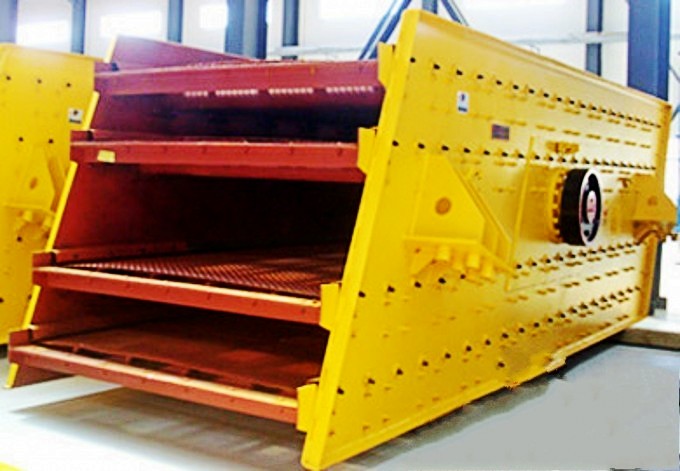
Circular vibrating screen is called circular motion, which is a new type of multi-layer, high-efficiency vibrating screen. The circular vibrating screen adopts a cylindrical eccentric shaft exciter and a bias block to adjust the amplitude. The material screening line is long and the screening specifications are diverse. The electric motor drives the eccentric block of the exciter to rotate at high speed through a V-belt, generating a large centrifugal inertia force and exciting the sieve box to produce circular motion with a certain amplitude. The material on the sieve is subjected to continuous throwing motion by the impulse transmitted by the sieve box on the inclined sieve surface. During the process of meeting the material with the sieve surface, particles smaller than the sieve hole are passed through the sieve, thus achieving classification.
Linear vibrating screen
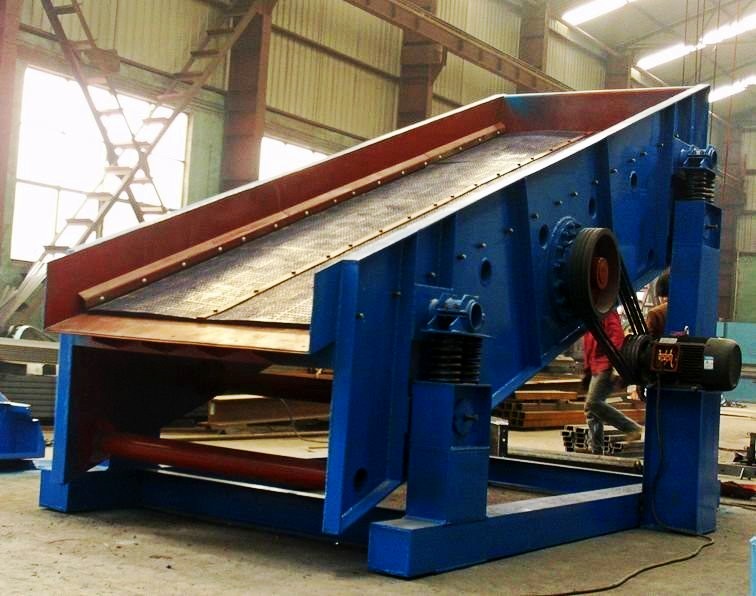
The linear vibrating screen is driven by dual exciters. When the two exciters rotate synchronously and in reverse, the excitation force generated by their eccentric blocks cancels each other out in the direction parallel to the motor axis, and forms a combined force in the direction perpendicular to the motor axis. Therefore, the motion trajectory of the screen machine is a straight line. The two motor shafts have an inclination angle relative to the screen surface. Under the combined force of excitation force and material self gravity, the material is thrown up on the screen surface and undergoes a jumping forward linear motion, thereby achieving the purpose of screening and grading the material.
Difference comparison
1. Motion trajectory
The material on the circular vibrating screen moves in a circular motion, while the material on the linear screen moves forward in a straight line.
2. Exciter
The circular vibrating screen is also known as a single axis vibrating screen because the exciter is a shaft that works using an inertia motor. The linear vibrating screen exciter consists of two shafts and works using the principle of vibration motor excitation, so it is also known as a double axis vibrating screen.
3. Blockage phenomenon
The material of the circular vibrating screen moves in a parabolic circular trajectory on the screen surface, which disperses the material as much as possible and improves the bouncing force of the material. The material stuck in the screen hole can also jump out, reducing the phenomenon of hole blockage.
4. Installation layout
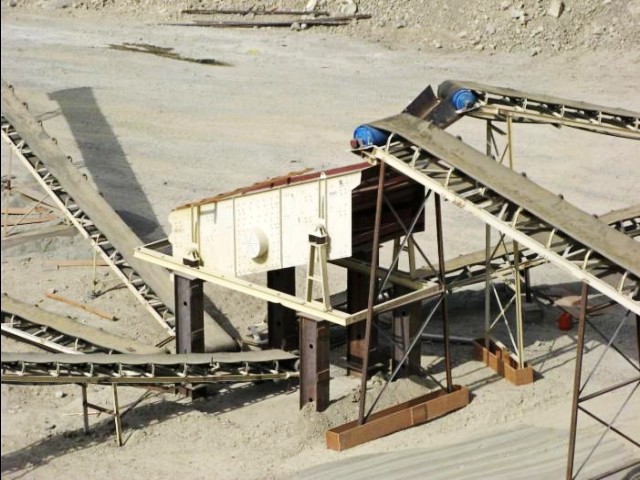
Due to the small inclination angle of the screen surface, the height of the linear vibrating screen is reduced, making it easier for process layout.
5. Screen inclination angle
According to the particle size of the material, the circular vibrating screen can change the inclination angle of the screen surface, thereby changing the movement speed of the material along the screen surface and improving the processing capacity of the screen machine. Generally speaking, the inclination angle of the screen surface of a linear vibrating screen is relatively small in production.
6. Material
In general, thick plates are used in the production of circular vibrating screens, and the box is made of manganese steel to resist the impact force of materials during the screening process. The main materials used in the production of linear vibrating screens are lightweight plates or stainless steel plates.
7. Applicable fields
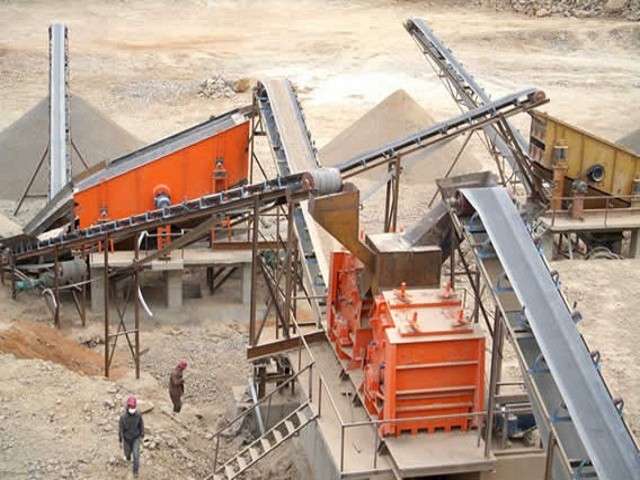
Circular vibrating screens are mainly used for screening materials with high specific gravity, large particle size, and high hardness. They are widely used in mining industries such as mines, coal mines, and quarries.
Linear sieve is mainly used to screen materials with fine particles, light specific gravity, and low hardness, mainly dry powder, fine particle or micro powder materials. It is usually widely used in the food, chemical, building materials, and pharmaceutical industries.
8. Processing ability
For a circular vibrating screen, since the exciter is arranged above the center of gravity of the screen box, the elliptical long axes at both ends of the screen box form a bottom eight shape, and the upper end of the elliptical long axis at the feeding end faces the discharge direction, which is conducive to the rapid dispersion of materials. The upper end of the elliptical long axis at the discharge end is opposite to the discharge direction, reducing the speed of material movement and facilitating the passage of difficult to screen materials. The circular arc-shaped screen surface also increases the effective area of the screen machine, thereby improving its processing capacity.
9. Environmental friendliness
The linear vibrating screen can adopt a fully enclosed structure, without dust spillage, which is more conducive to environmental protection.
summary
In the field of mining crushing, circular vibrating screen is widely used. In actual production, whether to choose a circular vibrating screen or a linear vibrating screen mainly depends on the type of material processed by the user and the application field. The purpose of screening is different, and the equipment selected also varies.