
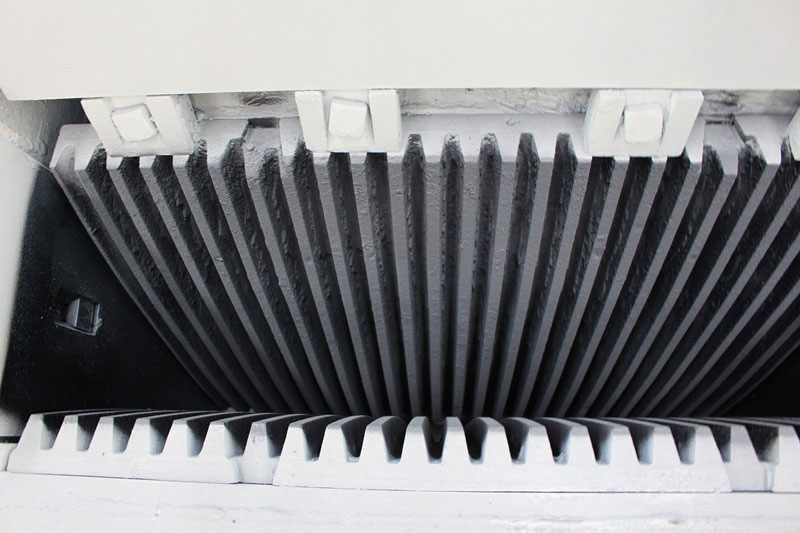
Jaw plates are generally made of materials such as high manganese steel, medium manganese steel, high chromium cast iron, and medium carbon low-alloy cast steel.
High manganese steel
Because both the moving and fixed jaw plates of the jaw crusher are subjected to compression and friction, the material of the jaw plate needs to ensure good toughness while maintaining a certain strength, in order to ensure that the jaw plate has good impact resistance.
High manganese steel, as an alloy steel material, is named after the high manganese content in cast manganese steel alloys. Controlling the manganese content within a moving range can ensure that manganese steel alloys have both good hardness and wear resistance, as well as good toughness.
Jaw crusher jaw plate
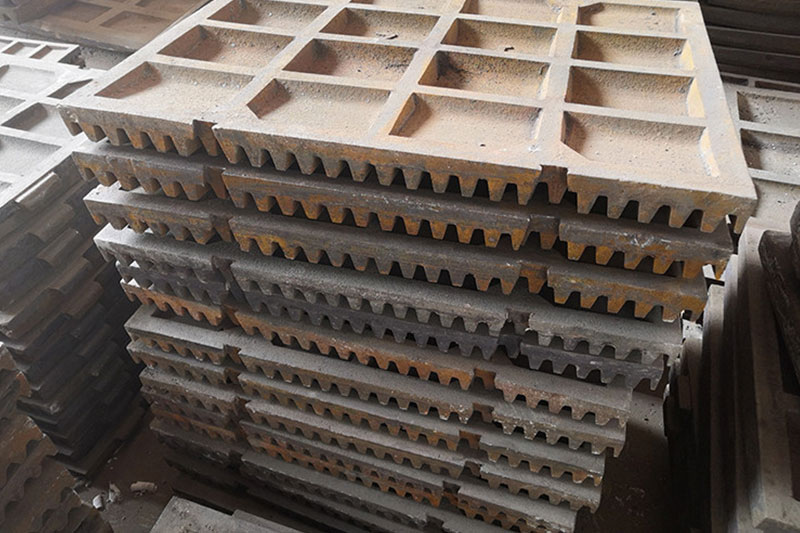
Medium manganese steel
As a primary crusher, the jaw crusher has a wide range of applications, and therefore needs to deal with complex materials and relatively harsh working environments. Therefore, more middle jaw plate materials are needed to cope with different working conditions and environments, in order to achieve the best working state of the jaw plate.
For example, adding elements such as chromium (Cr) to manganese steel alloys to improve their properties. Medium manganese steel is made by reducing the corresponding manganese content in manganese steel alloys and adding other elements to improve their wear resistance. According to relevant experimental verification, the actual service life of medium manganese steel jaw plates is about 20% longer than that of high manganese steel, and the cost is comparable to that of high manganese steel.
High chromium cast iron
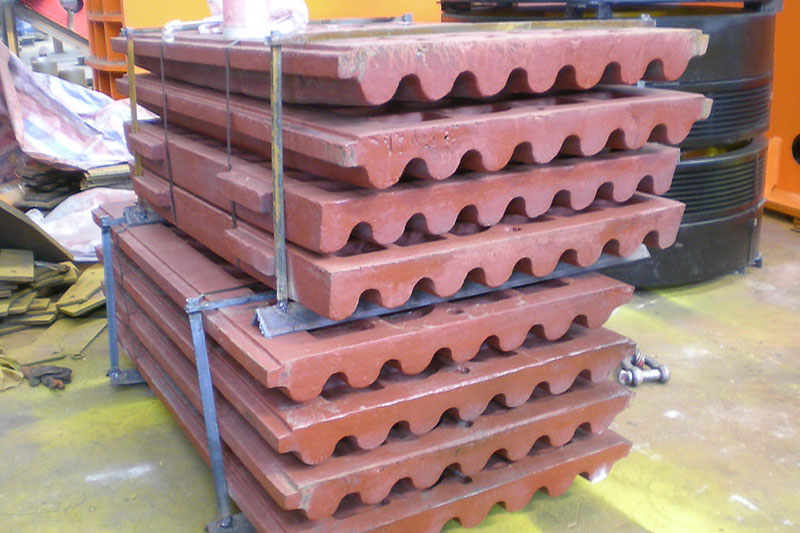
High chromium cast iron jaw plates have high wear resistance, but poor toughness, so the effect of using them directly as jaw plate materials is poor. However, some jaw crushers use the composite jaw plate process to produce jaw plates. The principle is to combine high chromium cast iron with high manganese steel jaw plates to maintain high wear resistance and good toughness. Although the service life of this type of jaw plate has been significantly improved, its manufacturing is relatively complex, the manufacturing process is relatively complicated, and the cost is relatively high.
Medium carbon low alloy cast steel
Medium carbon low-alloy cast steel can meet the requirements of jaw plates under different working conditions due to its relatively strong hardness and moderate toughness. So this material has been applied within a certain range.
In summary, various elements are generally added to alloy steel to enhance the wear resistance and toughness requirements of the jaw plate material. However, the ideal state often cannot be achieved simultaneously in reality. Therefore, when selecting equipment in practice, it is necessary to fully understand the equipment material selection and one's actual working conditions, choose suitable equipment materials, improve equipment efficiency, production output, and service life.