

Definition of sand and gravel aggregates
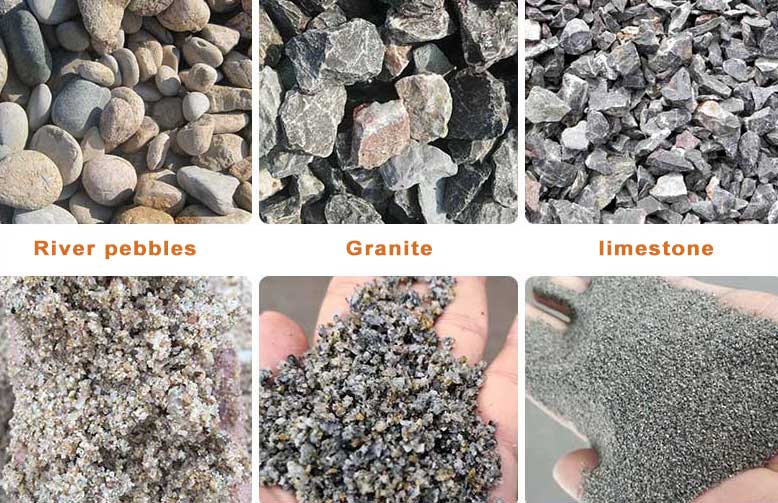
Sand and gravel aggregates are collectively referred to as sand, egg (gravel) stone, gravel, block stone, material stone and other materials in water conservancy projects.Sand and gravel aggregates are the main building materials for structures such as concrete and masonry in water conservancy projects.Aggregates with a particle size greater than 5mm are called coarse aggregates, that is, we often call stones, and aggregates with a particle size less than 5mm are called fine aggregates, also known as sand.Sand and gravel are the main building materials for structures such as concrete and masonry in water conservancy projects.
Can be divided into natural rock aggregates and artificially regenerated aggregates:
1. Natural rock aggregates are aggregates composed of natural rocks, such as sand, pebbles, gravel, etc.
2. Artificially recycled aggregates are recycled materials obtained by crushing concrete, clay bricks and industrial by-products such as slag, iron slag and slag powder.
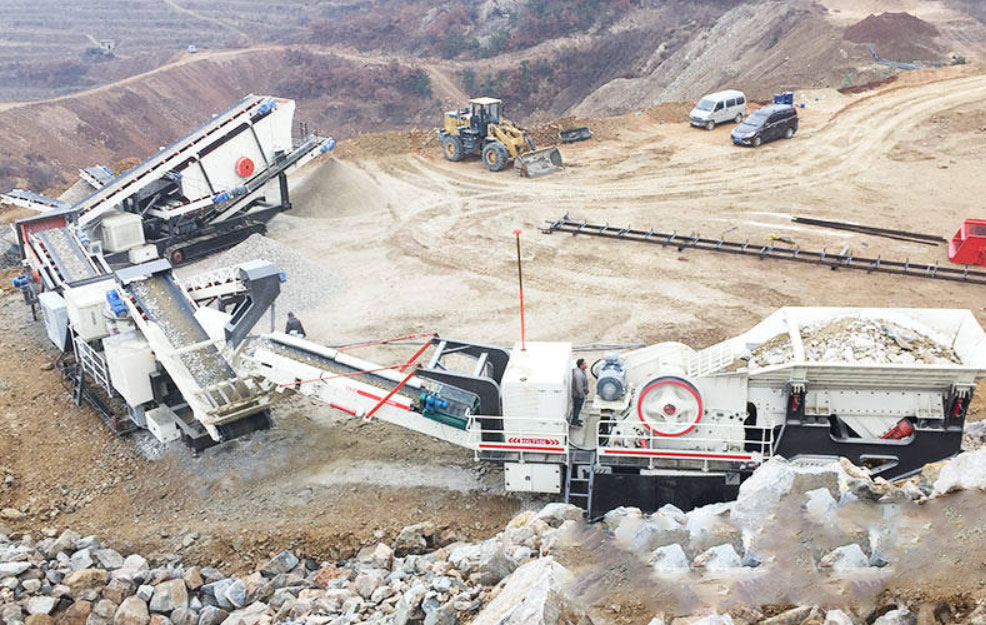
What is the system composition of the sand and gravel aggregate production line?
1. Feeding system: Generally, vibrating feeder equipment is used to be responsible for the supply of stone;
2. Conveying system: there are belt conveyors or plate conveyors, etc.;
3. Crushing system: At the heart of the complete set of equipment, there are multiple crushers to break various ore raw materials into finished materials of the required particle size.;
4. Screening system: screening equipment such as circular vibrating screens or linear vibrating screens.
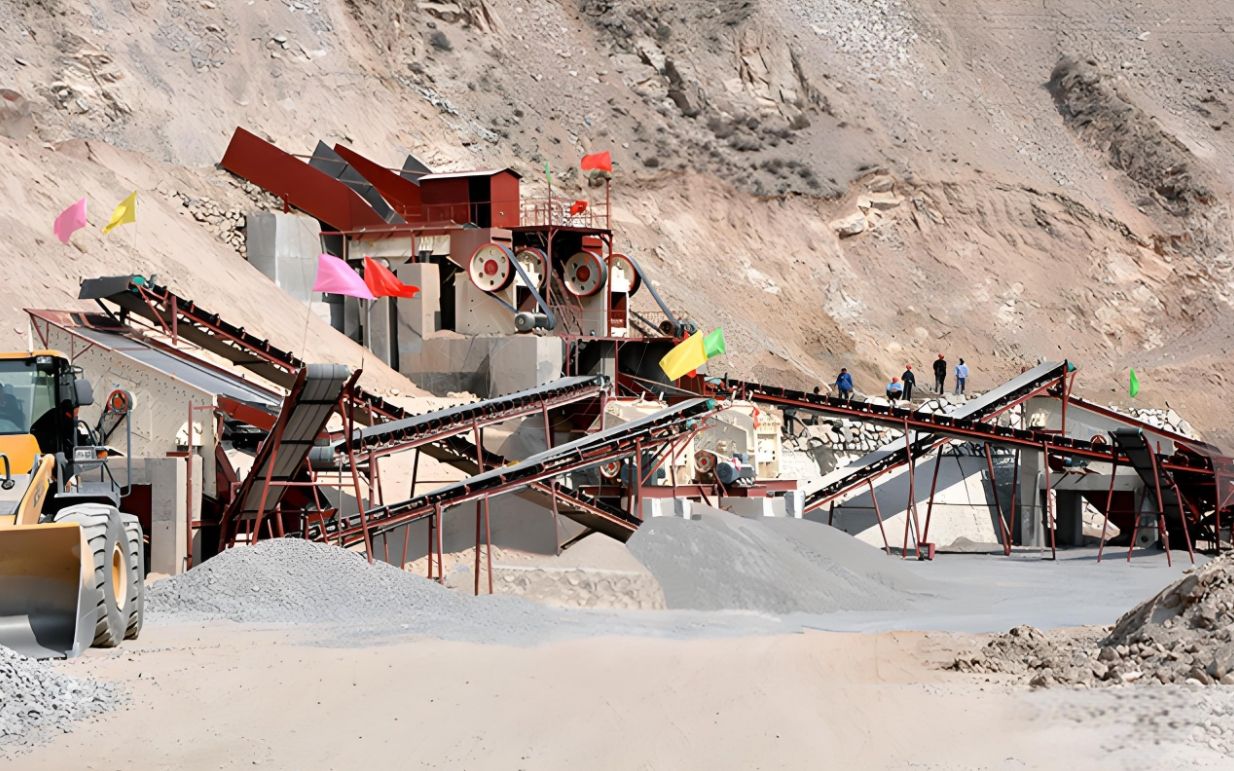
Detailed production process of sand and gravel aggregate production line
1. Primary crushing of stone:
Materials smaller than 150mm do not need to be broken, and fall directly on the belt into the primary yard; materials larger than 150mm are broken by a jaw crusher (discharge port 150mm), and the broken materials enter the primary yard.
2. The stone is broken in the middle:
After the roughly crushed stone reaches the secondary crusher, it can be broken by counterattack or cone breaking. The stone larger than 31.5mm enters the secondary crusher for crushing. The material smaller than 31.5mm is sieved into three specifications: 0-5mm, 5-13mm and 13-31.5 mm.
3. Sand making and screening link:
The raw materials for sand making are mainly a mixture of 0~5mm, 5~13mm and some 13~31.5mm. They enter the sand making machine for crushing and sand making, and are transported by belt into a three-layer vibrating screen. Materials larger than 5mm are returned to the sand making machine to continue crushing (it can also be sold as finishing stones), and the remaining materials are divided into 3~5mm and materials less than 3mm.
The specific choice of production equipment plan still needs to be decided according to the actual production raw materials and discharge size of the customer.