
During the operation of mineral processing equipment such as belt conveyors, the problem we are worried about is that there is a failure. If one link fails, the entire production line will be shut down.Once this kind of problem occurs, it will cause significant losses to the enterprise.Below, Xingkuang Group will take you to understand the common causes of belt conveyor failures.
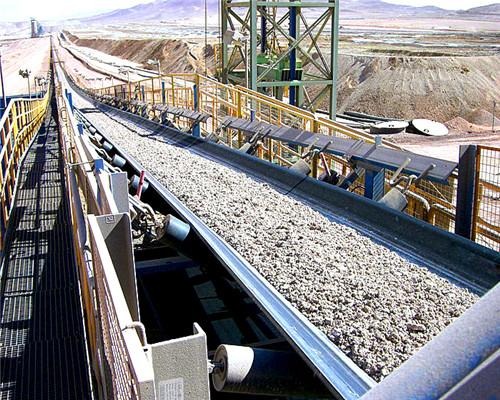
1. The conveyor roller is stained with coal dust on the roller, which causes the local diameter to become larger and the tape to run off.
2. The equipment itself, such as the large error in the cylindrical shape of the outer circle of the drum, the inflexible rotation of the roller, and the large error in the parallelism of the axis of the active drum and the driven drum, etc.
3. In terms of installation and commissioning, such as the installation of rollers, idlers, and racks, the installation does not meet the requirements of the specifications, and the position of the discharge port is biased, causing the belt to be biased by the load.
4. In terms of equipment maintenance, the maintenance of the equipment is not in place, mainly because the cleaning is not timely, and the conveyor roller is stained with coal dust, which causes the local diameter to become larger and the belt to run off.
5. Whether the tightness of the conveyor belt is appropriate, whether the transmission components such as bearings and gears are intact, whether the safety protection devices are safe, reliable and complete, and whether the equipment base is handled well.
6. Troubleshooting of belt slippage of belt conveyor: When the belt conveyor slippage occurs, the tensioning stroke can be adjusted to increase the tensioning force.Common tensioning methods are spiral tensioning, hydraulic tensioning, stable car tensioning and hammer tensioning.If the belt is deformed and the tensioning stroke is not enough, the belt can be cut off for a while.But don't blindly increase the tension, so as not to make the belt withstand unnecessary excessive tension and reduce the service life of the belt.The tensioning force of the belt should be adjusted according to the flow rate of the belt, as long as it can be pulled; it does not slip; and the bottom belt does not wrinkle.
Belt deviation is a common failure when the belt conveyor is running, and it is important to do a good job of prevention.The above is a summary of the common failure prevention methods of belt conveyors by XKJ Group, a mining machinery expert, and I hope it will be of benefit to everyone.