
In the field of gangue crushing, equipment with a processing capacity of 300tph (300 tons per hour) belongs to medium-to-large-scale production demand. The price of this specification of crusher is affected by factors such as equipment type, technical parameters, material process, etc., and the mainstream price range is 75,000 to 214,000 US dollars. The following is a typical model and technical and economic analysis suitable for gangue crushing:
1. Suitable models and technical parameters
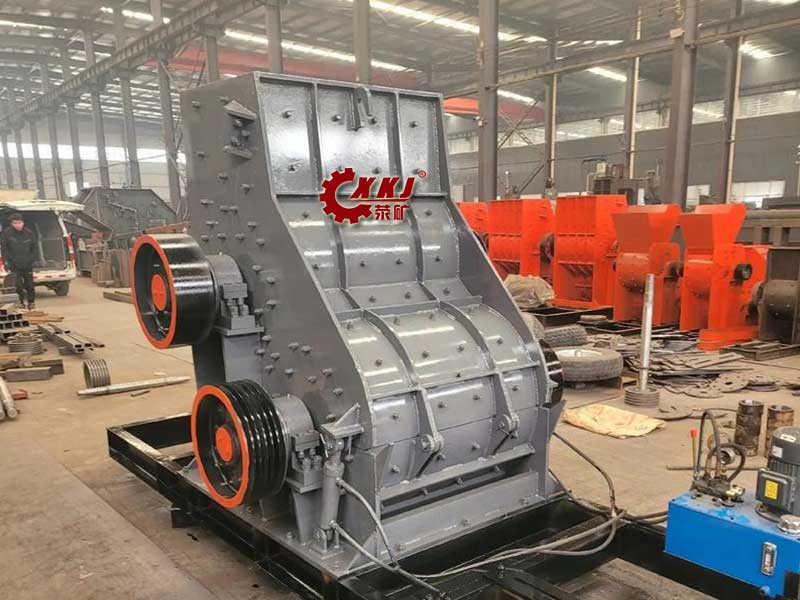
Heavy hammer crusher
Adopting a double rotor structure, equipped with an adjustable hammer head, feed particle size ≤800mm, finished product rate ≥85%, and coarse crushing and medium and fine crushing functions. Its core advantage is that a single machine can complete multi-stage crushing processes, which is particularly suitable for raw coal processing with a high gangue content.
The motor power of the 300tph model is usually 220-315kW, the equipment weighs about 35-50 tons, and a special foundation is required.
Two-stage non-screen bottom crusher
The two-stage series crushing chamber design achieves two crushings through high-speed rotating hammers, and the maximum feed particle size is ≤450mm. This model adopts a non-screen bottom structure to avoid the blockage problem caused by high-humidity coal gangue, and the finished product particle size uniformity reaches ±5mm.
The model adapted to 300tph needs to be equipped with a dual motor drive of more than 400kW, and the equipment length exceeds 10 meters.
Mobile crusher unit
Integrated feeding, crushing, and screening modules, crawler or tire chassis to achieve rapid transfer operations. Its modular design can be flexibly matched with main machines such as jaw crushers and impact crushers, especially suitable for the crushing needs of dispersed coal gangue yards.
The weight of the 300tph mobile unit is about 60-80 tons, and it needs to be equipped with a 380V industrial power supply or a diesel generator set for power supply.
2. Price composition and influencing factors
Basic model cost: heavy hammer type is about 75,000-128,000 US dollars, double-stage crusher is about 95,000-156,000 US dollars, and mobile units can reach 168,000-214,000 US dollars due to high integration.
Key component premium: The use of wear-resistant parts such as high-chromium alloy hammers and hydraulic adjustment devices can increase the life of the equipment by more than 30%, but the cost increases by about 12,000-25,000 US dollars.
Supporting system costs: including auxiliary equipment such as dust removal devices (about 8,000-15,000 US dollars) and automatic control systems (about 15,000-30,000 US dollars).
3. Selection recommendations
It is recommended to give priority to evaluating the hardness of the raw materials (Praeter coefficient is usually 2-4) and the moisture content (anti-blocking design is required when >15%). The heavy hammer crusher is balanced in terms of cost performance and yield rate, while the mobile unit is more suitable for multi-operation point scenarios. When purchasing, you need to pay attention to factory inspection data such as the equipment's no-load current and bearing temperature rise, and reserve 15%-20% of the budget for the reserve of wearing parts.