
The double-roll crusher has become a key equipment for processing stones of different hardness due to its extrusion crushing principle and flexible adjustment characteristics. By scientifically adjusting the equipment parameters and structural design, it can effectively meet the crushing needs of materials with significant hardness differences such as granite, limestone, and sandstone.
1. Working principle and hardness classification
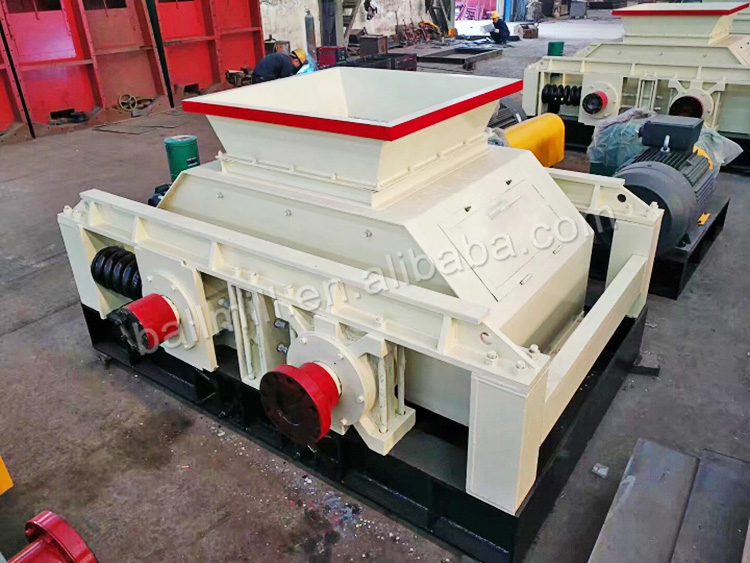
The double-roll crusher adopts an extrusion crushing method with two rollers rotating in opposite directions. The roller surface spacing determines the particle size of the output (usually 2-10mm). According to the Mohs hardness classification, stones can be divided into three categories:
High hardness (6-7): granite, basalt
Medium hardness (4-5): limestone, sandstone
Low hardness (1-3): gypsum, shale
2. Hardness adaptation technical solution
Dynamic adjustment of roller spacing
The hydraulic adjustment system can adjust the roller spacing in real time. Hard rocks such as granite need to expand the spacing to 8-10mm to reduce the crushing pressure; when processing limestone, it needs to be reduced to 3-5mm to enhance the extrusion effect. Models equipped with pressure sensors can automatically maintain a crushing force of 80-150MPa to avoid overload.
Roller surface structure optimization
High-hardness stone uses surfacing wear-resistant alloy roller surface (hardness HRC58-62), and is designed with wavy teeth to enhance bite; medium and low hardness materials use smooth rollers or shallow tooth rollers to reduce energy consumption. For stones with high quartz content, tungsten steel linings can be installed to improve wear resistance.
Differentiated speed matching
Granite is crushed with a linear speed of 8-12m/s, combined with a high-torque motor (power increased by 20%); when processing soft rocks such as shale, it is reduced to 5-8m/s to avoid excessive crushing. The frequency conversion control system can achieve precise speed regulation of ±0.5m/s.
3. Practical application cases
A granite crushing production line is equipped with a Φ1500×800 roller machine, with the roller spacing adjusted to 10mm, and a 5mm thick tungsten carbide layer welded on the roller surface. The processing capacity reaches 120t/h, and the yield rate is more than 95%; while the limestone crushing line uses a Φ1200×600 model, with a roller spacing of 5mm and a smooth roller design, which reduces the power consumption per ton by 40%.
4. Maintenance and precautions
After working with high-hardness materials, the roller surface wear needs to be checked, and the welding repair cycle does not exceed 200 hours
Regularly clean the roller surface adhesive to prevent the phenomenon of roller wrapping when crushing soft rocks
It is recommended to install a scraper plate for the crushing of medium-hard materials to keep the roller surface clean
The current intelligent roller machine has integrated AI algorithms, which can automatically optimize parameters according to the hardness of the material, so that the crushing efficiency of different stones can be increased by 15%-25%. With the development of wear-resistant material technology, the service life of the roller surface has exceeded 8,000 hours, providing a reliable solution for diversified stone processing.