
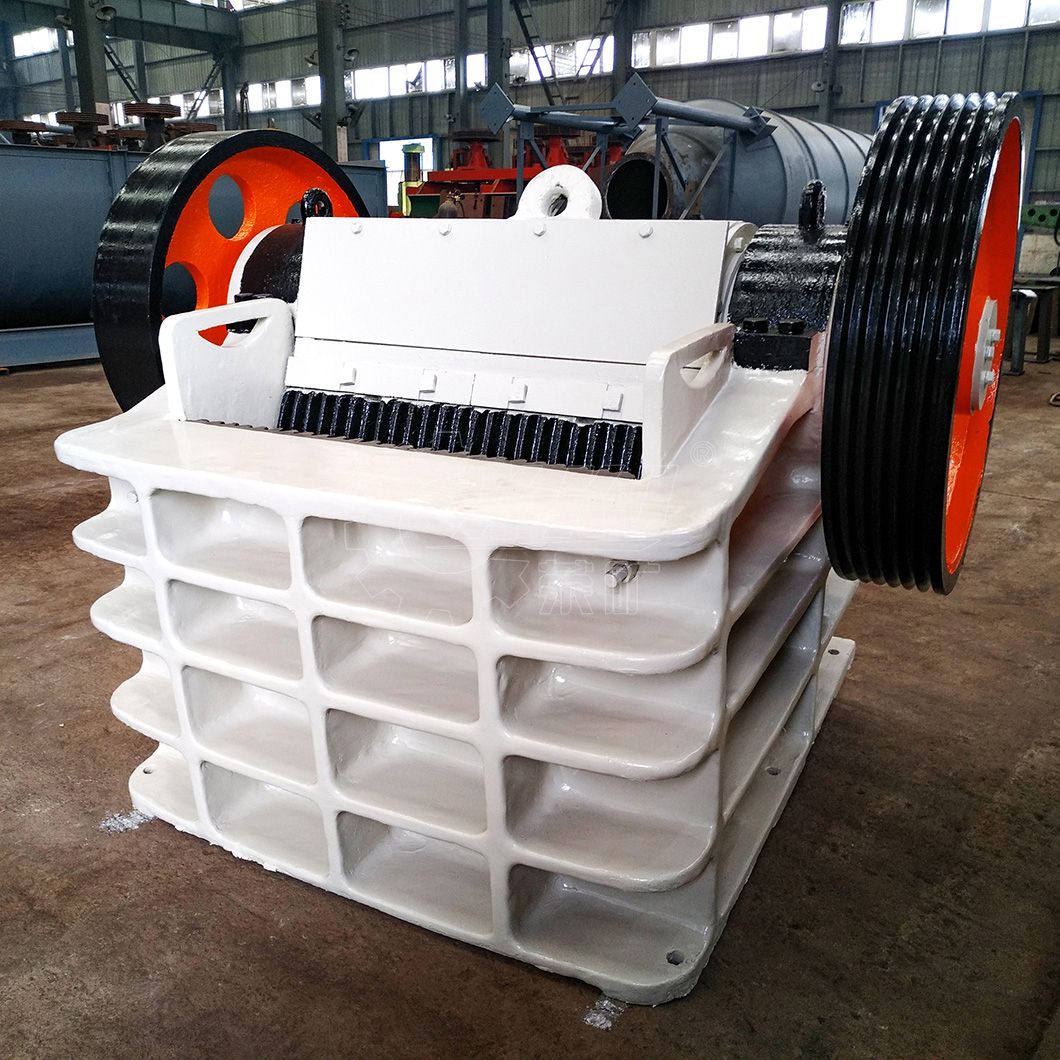
1. Overview of jaw crusher
As the main equipment for the initial crushing of ore materials, jaw crusher is widely used in many industries such as mining, smelting, building materials, highways, railways, water conservancy and chemical industries. Its characteristics include large crushing ratio, uniform product particle size, simple structure, reliable performance, easy maintenance and economical operating costs. However, due to the harsh working environment, its components need to be optimized and strengthened, and the necessary maintenance knowledge needs to be mastered to improve the stability of the equipment.
2. Stability control of material flow
.Material composition of the stabilizing bin
The materials entering the stabilizing bin are mainly composed of circulating materials (side materials) and mixed materials from the cement batching warehouse. Part of the materials coming out of the roller press are circulated back to the stabilizing bin, and the other part enters the crusher.
.Stability of material flow of the crusher
The working stability of the crusher depends to a large extent on the stability of the material flow entering the crusher. When the amount of material in the stabilizing bin is basically unchanged, the amount of material entering the stabilizing bin is basically equal to the amount of material leaving the stabilizing bin, thereby achieving stability of the material flow.
.Regulation of the amount of material in the stabilizing bin
Method: The amount of return material is controlled by adjusting the angle of the dividing plate set under the roller press, thereby adjusting the material flow entering the stabilizing bin. When the amount of material in the stabilizing bin decreases, the angle of the dividing plate is increased to increase the amount of return material; conversely, the angle of the dividing plate is reduced.
Problem: This adjustment method is completely dependent on the observation of the change in the amount of material in the stabilizing bin, and there are problems such as large errors and long lag time, which leads to poor stability of the material flow entering the crusher, and is prone to "saturation" or "empty grinding", affecting crushing efficiency and output.
3. Suggestions for improving the stability of jaw crushers
.Improving the material flow control system
Introducing an automated control system to monitor the changes in the amount of material in the stabilizing bin in real time, and automatically adjusting the angle of the dividing plate according to the preset threshold, so as to achieve precise control of the material flow.
.Optimizing the design of the crusher
Optimize the structure of the crusher to improve its adaptability and stability to the material flow. For example, improve the shape and size of the crushing chamber, optimize the material selection and assembly method of the crushing plate, etc.
.Strengthen maintenance and management
Regularly perform maintenance and inspection on the jaw crusher to promptly identify and deal with potential problems. At the same time, strengthen the training and management of operators to improve their operating skills and sense of responsibility.
.Pay attention to material characteristics
For different types of materials, adjust the operating parameters and crushing methods of the crusher according to their characteristics to ensure the stability and efficiency of the crushing process.
In summary, the stability of the jaw crusher when crushing materials can be significantly improved by improving the material flow control system, optimizing the crusher design, strengthening maintenance and management, and paying attention to material characteristics.