
Cone crushers and jaw crushers play a central role in mining crushing operations, but their structural design and operating principles differ significantly. Cone crushers utilize a laminated crushing principle, achieving continuous crushing through the squeezing action between the moving and fixed cones. Its core components include the main shaft, eccentric sleeve, and hydraulic adjustment system, resulting in a compact structure and uniform force distribution. Jaw crushers, on the other hand, employ intermittent squeezing, relying on the cyclical motion of fixed and movable jaws to crush materials. While their structure is relatively simple, they are subject to significant impact loads.
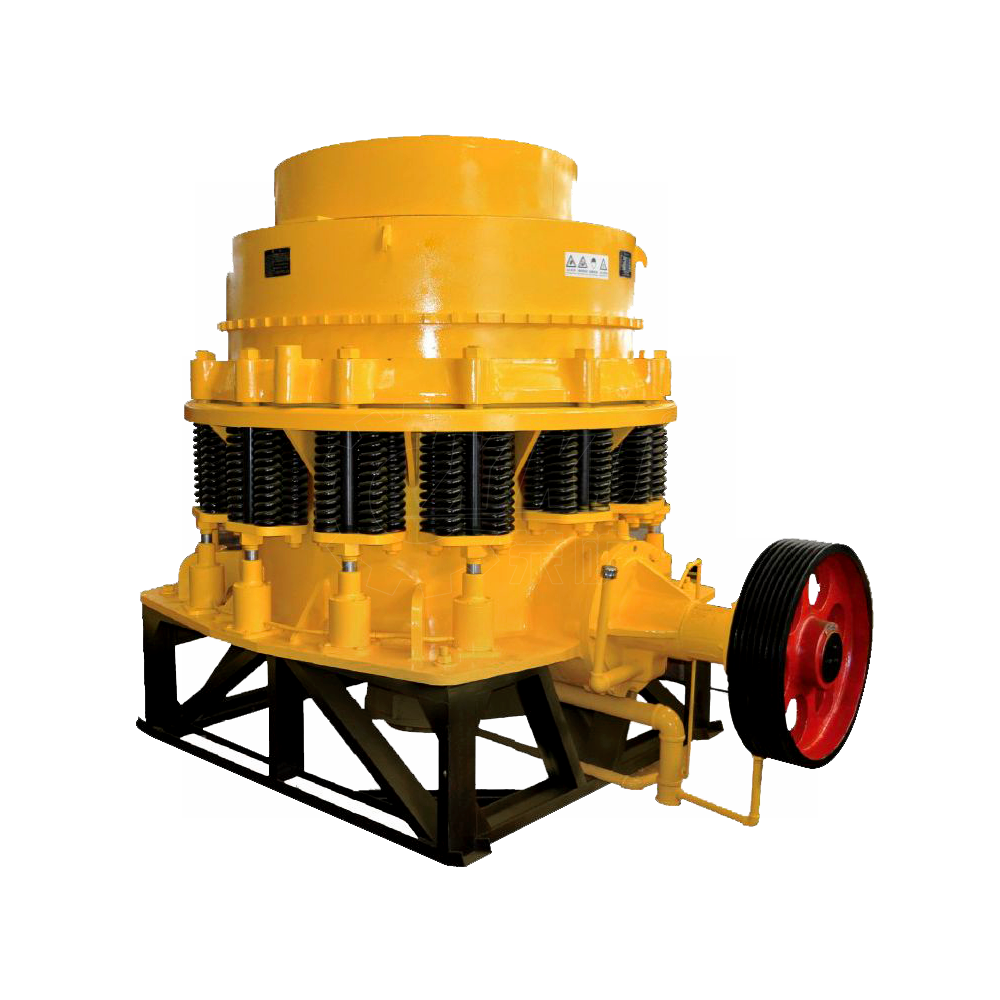
In terms of maintenance complexity, the hydraulic system and precision bearings of cone crushers require specialized maintenance, while the mechanical structure of jaw crushers is more easily accessible on-site. This design difference directly impacts the durability of both types of equipment. The durability advantage of cone crushers lies primarily in the low wear characteristics of their laminated crushing principle. Because the material is uniformly squeezed from multiple angles within the crushing chamber, the wear rate of key components, such as the mortar and crushing walls, is approximately 30%-40% lower than that of jaw crushers. When crushing high-hardness materials such as granite, their liner life can exceed 8,000 hours. The hydraulic overload protection system automatically releases unbreakable objects like iron blocks, preventing serious failures like spindle breakage and extending the equipment's downtime by 50% under harsh operating conditions. However, its precision hydraulic components are sensitive to oil quality, and improper maintenance can lead to system failure, negatively impacting overall durability.
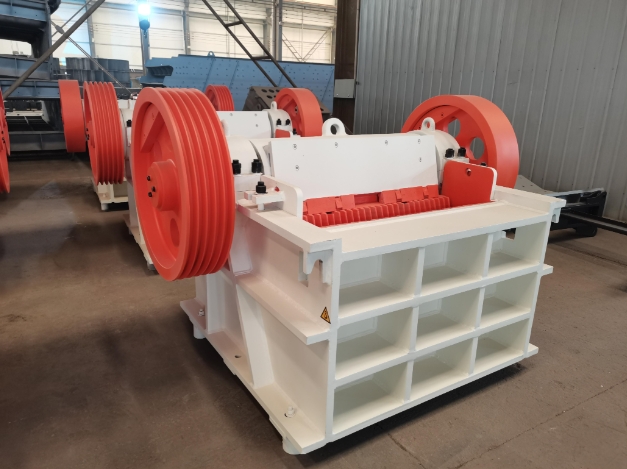
The durability of a jaw crusher lies in its simple and reliable mechanical structure. The heavy-duty cast steel movable jaw assembly and deep cavity design enable it to withstand transient impact loads, making it particularly suitable for handling oversized materials. A copper mine, using a PE-1200×1500 jaw crusher, has operated continuously for five years, requiring only three jaw plate replacements, a task that can be completed by an average worker in just two hours. However, direct wear between the jaw plate and the side guard leads to faster wear when handling high-hardness materials. When processing basalt, the jaw plate life is typically only about 60% of that of a cone crusher liner. Furthermore, the lack of an overload protection device makes components such as bearings more susceptible to damage during overload.