
In the limestone processing flow, primary crushing is a crucial initial step that directly impacts subsequent screening, secondary crushing, and the quality of the final product. Therefore, selecting the appropriate primary crushing equipment is essential.
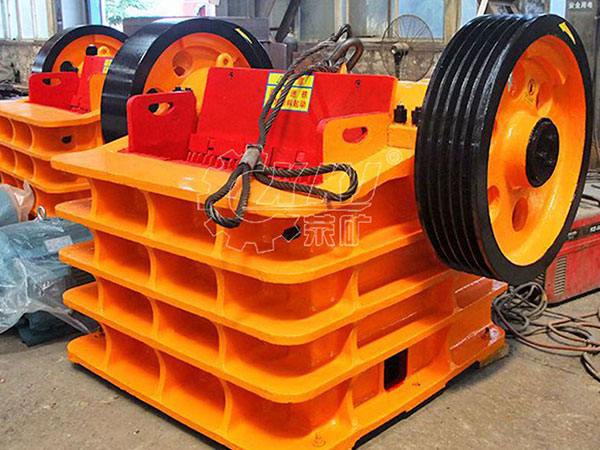
Limestone has a medium hardness (Mohs hardness of approximately 3), but often contains a certain amount of moisture and clay impurities, and the feed size is large (usually 500-1000 mm or more). Given these characteristics, jaw crushers are typically the preferred choice. They have a simple structure, reliable operation, and can effectively handle large blocks of material, producing a uniform output size. They also have strong adaptability to wet materials and impurities. Furthermore, this equipment is easy to maintain, has low energy consumption, and is suitable for continuous high-intensity operation, making it widely used in the primary crushing stage of mining, cement, and aggregate production lines.
In some special cases, such as when the raw material size is extremely large (exceeding 1.2 meters) or the production capacity requirements are very high, gyratory crushers can also be considered. They have a higher processing capacity and are suitable for large-scale projects, but the investment and installation costs are higher, and they require stricter foundation requirements. They are generally used in ultra-large limestone mines.
In contrast, impact or hammer crushers, while offering a high crushing ratio and good product shape, are more suitable for the secondary and fine crushing stages. If used for primary crushing, large hard objects or impurities can easily cause rapid wear of the hammer plates or liners, increasing operating costs.