
The energy consumption of a 50-ton-per-hour (50tph) stone production line primarily depends on the power configuration and operating efficiency of the equipment used in crushing, screening, and conveying processes. Typically, the total installed power of such a medium-sized stone quarry system is between 300 and 450 kilowatts. Assuming an average load rate of 70%, the actual operating power is approximately 210 to 315 kilowatts.
Based on 10 hours of operation per day, the average daily electricity consumption is roughly between 2100 and 3150 kilowatt-hours. If operating for 300 days a year, the annual electricity consumption can reach 630,000 to 945,000 kilowatt-hours. This figure is equivalent to the annual electricity consumption of hundreds of households, highlighting that stone processing is a high-energy-consuming industry.
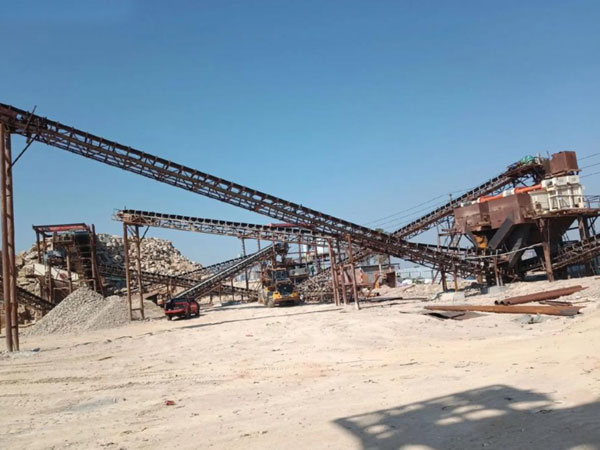
Many factors influence energy consumption. The greater the hardness of the raw material, the more difficult the crushing, requiring more electricity from the equipment. Aging equipment or improper maintenance can also lead to decreased efficiency and increased ineffective energy consumption. Furthermore, the rationality of the process flow design—such as whether multi-stage closed-loop circulation is used and whether the material conveying path is optimized—significantly affects overall energy efficiency. In recent years, with the development of energy-saving technologies, some production lines have effectively reduced energy consumption per unit product through methods such as frequency conversion control, high-efficiency motors, and intelligent scheduling systems. For example, introducing automated control systems can reduce idle running time, while reasonable particle size classification can avoid repeated crushing, thereby saving electricity.