
In the primary crushing stage of a kaolin processing production line, the choice between a jaw crusher and a hammer crusher mainly depends on the hardness, moisture content, and particle size requirements of the raw material.
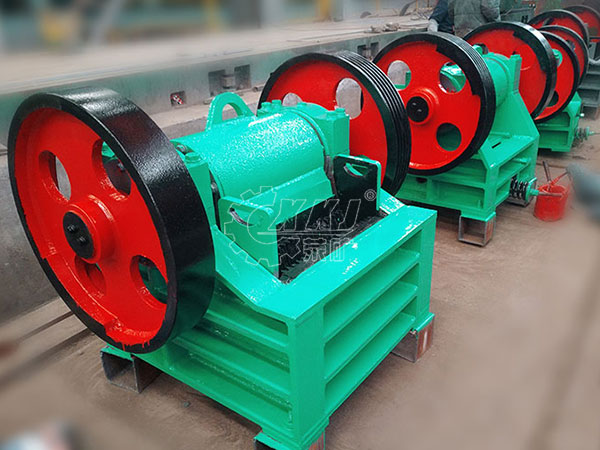
If the raw kaolin ore is large and hard, a jaw crusher is a more reliable choice. It utilizes the principle of compression for crushing, has a simple and robust structure, is highly adaptable to materials with high moisture content, and is less prone to clogging. Its output particle size is relatively uniform, providing stable feeding conditions for subsequent medium and fine crushing equipment, making it particularly suitable as the first crushing step in the production line, ensuring the continuity and stability of system operation.
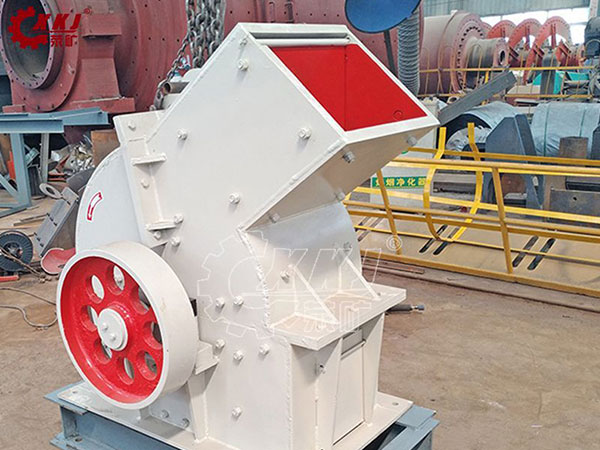
Conversely, if the raw ore has moderate size, low hardness, and the requirements for controlling over-crushing are not strict, a hammer crusher is more advantageous. It uses high-speed rotating hammers to impact the material, achieving a large single-pass crushing ratio, directly crushing the material to a finer particle size, thus simplifying the process and reducing equipment investment. However, hammer crushers are quite sensitive to the moisture content of the material; if the kaolin has too high a moisture content, it can easily lead to grate blockage, affecting production capacity.
In summary, for most kaolin beneficiation plants, the most common process is a combination of jaw crusher for coarse crushing and impact crusher or Raymond mill for fine crushing. Jaw crushers are typically the preferred coarse crushing equipment due to their wide adaptability and reliability; while hammer crushers are more suitable for one-pass crushing of medium-hard materials under specific working conditions. Enterprises should make flexible decisions based on the characteristics of their own ore.