
Marble is classified as a medium-hardness material, typically possessing a Mohs hardness between 3 and 4; its texture is relatively soft and brittle. For a production requirement of 10 tons per hour, this falls within the typical range of a small-scale processing operation. When selecting equipment, one should strictly avoid blindly pursuing large-scale machinery; instead, the focus should be placed on the equipment's cost-effectiveness, the shape of the finished product, and energy consumption control.
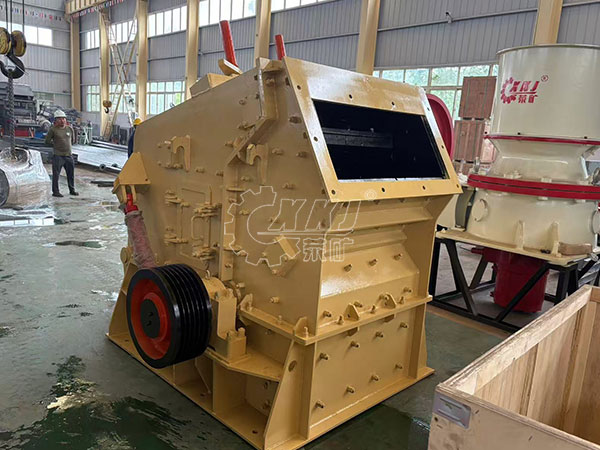
For a material like marble, an impact crusher represents a highly competitive choice. By utilizing impact energy to fracture the material, it effectively prevents the formation of micro-cracks within the marble. The resulting finished product features a cubic shape with minimal needle-like or flaky particles, making it ideally suited for the production of construction aggregates or decorative stone. Additionally, a hammer crusher serves as an economical alternative; its simple structure allows for single-stage crushing—eliminating the need for secondary crushing—which can significantly reduce initial investment costs.
In terms of capacity matching, equipment rated at 10 tons per hour falls into the small-scale category; it is advisable to maintain a capacity reserve of 10% to 20% to accommodate fluctuations in the feed rate. Furthermore, marble processing tends to generate significant dust; therefore, when making a purchase, it is imperative to evaluate the equipment's sealing performance. Ideally, the system should be equipped with a pulse dust removal system or a water-mist dust suppression device to ensure compliance with environmental emission standards.
Finally, do not overlook the costs associated with wear parts. Although marble is not particularly hard, long-term abrasive wear remains a factor. It is recommended to select equipment featuring blow bars and liners made from high-manganese steel or alloy materials, and to verify whether the manufacturer offers a user-friendly replacement design to minimize the difficulty of future maintenance and reduce overall operating costs.