

Hammer mills offer significant advantages in processing gold ore, primarily due to the adaptability of their structural characteristics and operating principles.
1. Efficient Crushing Mechanism
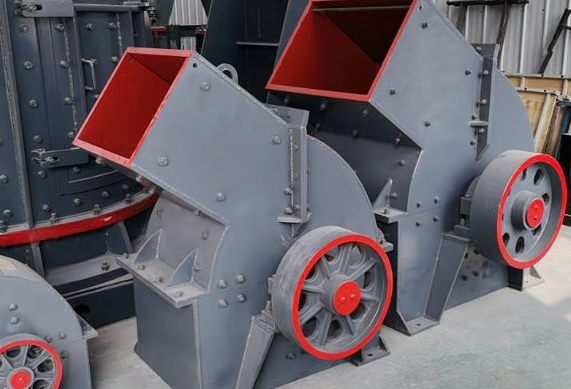
A hammer mill uses high-speed rotating hammers to impact and crush materials. This dynamic crushing method is particularly suitable for processing medium-hardness, brittle materials such as gold ore. Its crushing ratio can reach over 10:1, allowing it to quickly reduce gold ore from raw ore to the 10-30mm particle size required for heap leaching. The equipment's oscillating hammer head automatically avoids unbreakable hard objects, protecting critical components.
2. Advantages in Particle Size Control
The equipment features a replaceable screen plate at the bottom, enabling precise control of the output particle size, meeting the stringent particle size uniformity requirements of gold heap leaching. In practice, the hammer mill can keep over 85% of the material within the 10-30mm range, significantly improving heap leaching penetration. Compared to traditional jaw crushers, its particle size acceptance rate can be increased from 60% to over 95%.
3. Wear-Resistant Design Improves Economic Efficiency
Gold ore has a Mohs hardness of 6-7, making conventional equipment susceptible to wear. The hammer mill utilizes high-chromium alloy hammers, reducing wear by 70% and extending its service life to over 1,500 hours. The specially designed, fully sealed cabinet prevents the escape of gold-containing ore dust, minimizing precious metal loss. The mobile hammer mill also reduces ore transportation costs and, in practice, has increased recovery rates by 15%.