
As a key industrial raw material, gypsum's unique physical and chemical properties dictate specific requirements for its crushing process. Understanding gypsum's basic properties and selecting appropriate crushing equipment are key to ensuring efficient and high-quality gypsum processing.
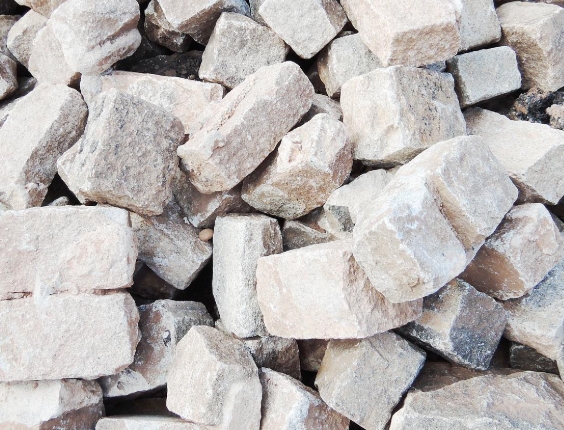
Physical Properties of Gypsum
Gypsum is a medium-hard mineral, typically ranging from 2 to 3 on the Mohs scale. Its brittle nature makes it suitable for impact crushing. Its structure is often layered or fibrous, and its moisture content typically ranges from 5 to 15%. Excessive humidity can affect crushing efficiency and equipment life. When heated, gypsum releases water of crystallization, releasing approximately 600 kilojoules of heat per kilogram. This property provides excellent fire resistance, but temperature control during the crushing process is also crucial to prevent premature dehydration that could affect subsequent processing. Furthermore, gypsum products have a high porosity of 50%-60%, a low apparent density, and low thermal conductivity, making them susceptible to dust generation during the crushing process, necessitating careful dust removal measures.
Gypsum Processing Requirements
Gypsum is typically crushed using a multi-stage crushing process. For raw ore with a particle size of 400-800mm, primary crushing is first required to reduce it to less than 100mm. Secondary crushing further reduces the material to 30-80mm. The fine crushing stage requires the output particle size to be controlled below 15mm, with at least 80% of the final product particles smaller than 100 mesh. This "more crushing, less grinding" process significantly reduces energy consumption in subsequent grinding steps. In actual production, while closed-circuit crushing requires higher equipment investment, it provides better control of product particle size and improves overall production efficiency.
Crusher Selection Recommendations
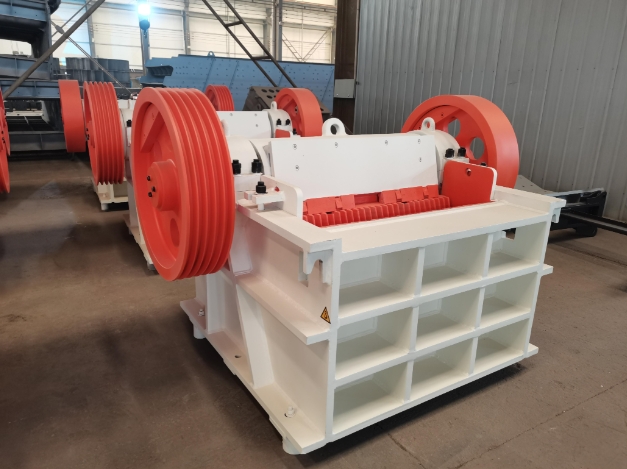
Given the characteristics of gypsum, the selection of crushing equipment should consider factors such as hardness, moisture content, and structural characteristics. A jaw crusher is recommended for primary crushing. Its high capacity, simple structure, and ability to effectively handle large gypsum ore can achieve a crushing ratio of over 4:1. An impact crusher is recommended for secondary crushing. It is highly adaptable to medium-hard materials, produces uniform output particle size, and has relatively low maintenance costs. For the fine crushing stage, hammer crushers or impact crushers can be used. Both devices precisely control the output particle size and are particularly suitable for crushing gypsum to below 15mm. For high-moisture gypsum materials, a grate-free hammer crusher is recommended to prevent material sticking and clogging. In practice, a 200-ton-per-hour production line often uses a PE750×1060 jaw crusher in combination with a CS160 cone crusher and an HPC220 cone crusher. This configuration balances processing capacity and particle size control requirements.