
Anthracite, a high-carbon, high-hardness coal, directly impacts production efficiency and economic benefits. Professional selection of crushing equipment for anthracite lumps requires a comprehensive consideration of material hardness, particle size requirements, and process characteristics, considering the physical properties and processing requirements of anthracite lumps.
Crushing Equipment Selection Criteria
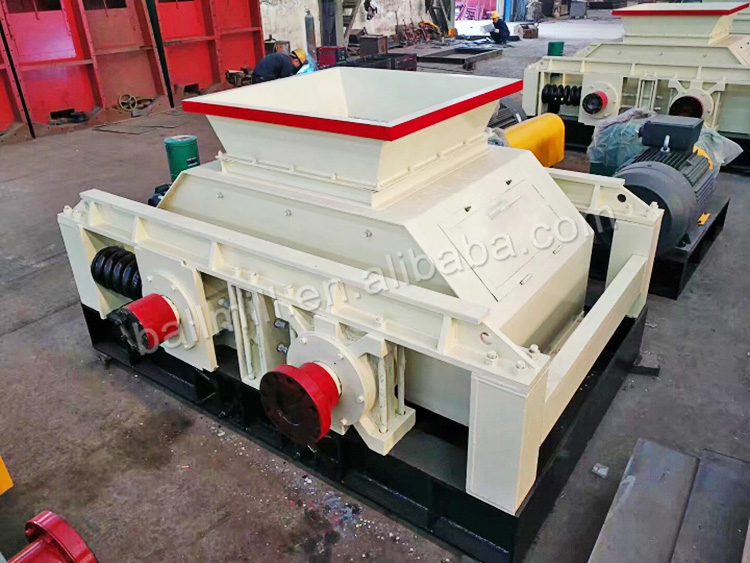
Anthracite lumps are characterized by high hardness (Mohs hardness 3-4) and low volatile matter (<10%). Traditional hammer crushers are prone to over-crushing and excessive energy consumption. Double-roll crushers, which utilize a compression mechanism for crushing, are particularly well-suited for handling brittle materials like anthracite. Their rollers are constructed of high-chromium manganese steel, offering over 40% greater wear resistance than conventional alloys. For feed lumps ≤3 cm in size, double-roll crushers achieve a yield of over 90% for lumps under 5 mm, and the output size can be precisely controlled by adjusting the roller gap.
Preferred Equipment Technical Parameters
Hydraulic double-roll crushers excel in anthracite processing. Their fully hydraulic system allows for real-time adjustment of roller pressure, ensuring even distribution of crushing force. Taking the Jihong brand as an example, this equipment has a processing capacity range of 5-450 tons/hour, and a roller lifespan of over 8,000 hours, which is three times longer than the maintenance interval of spring-type models. The dual-stage crusher is also suitable for the primary crushing of large anthracite lumps. The 1600×1400 model can handle up to 180 tons and is equipped with an overload protection device to ensure safe underground operations.
Supporting System Recommendations
The crushing system should be equipped with a pulse bag dust collector to control dust emission concentrations below 10mg/m³. The filter bags should be made of water- and oil-repellent materials to suit the anthracite processing environment. For the conveying stage, an enclosed belt conveyor is recommended, combined with a magnetic separator to separate metallic debris. An automated control system allows for remote adjustment of the roller gap, adapting the equipment to anthracite feedstock of varying hardness, reducing overall energy consumption by over 25%.