

Hydraulic cone crushers and spring cone crushers exhibit significant differences in crushing hard rock, such as granite, primarily in terms of structural design, operating principle, and performance.
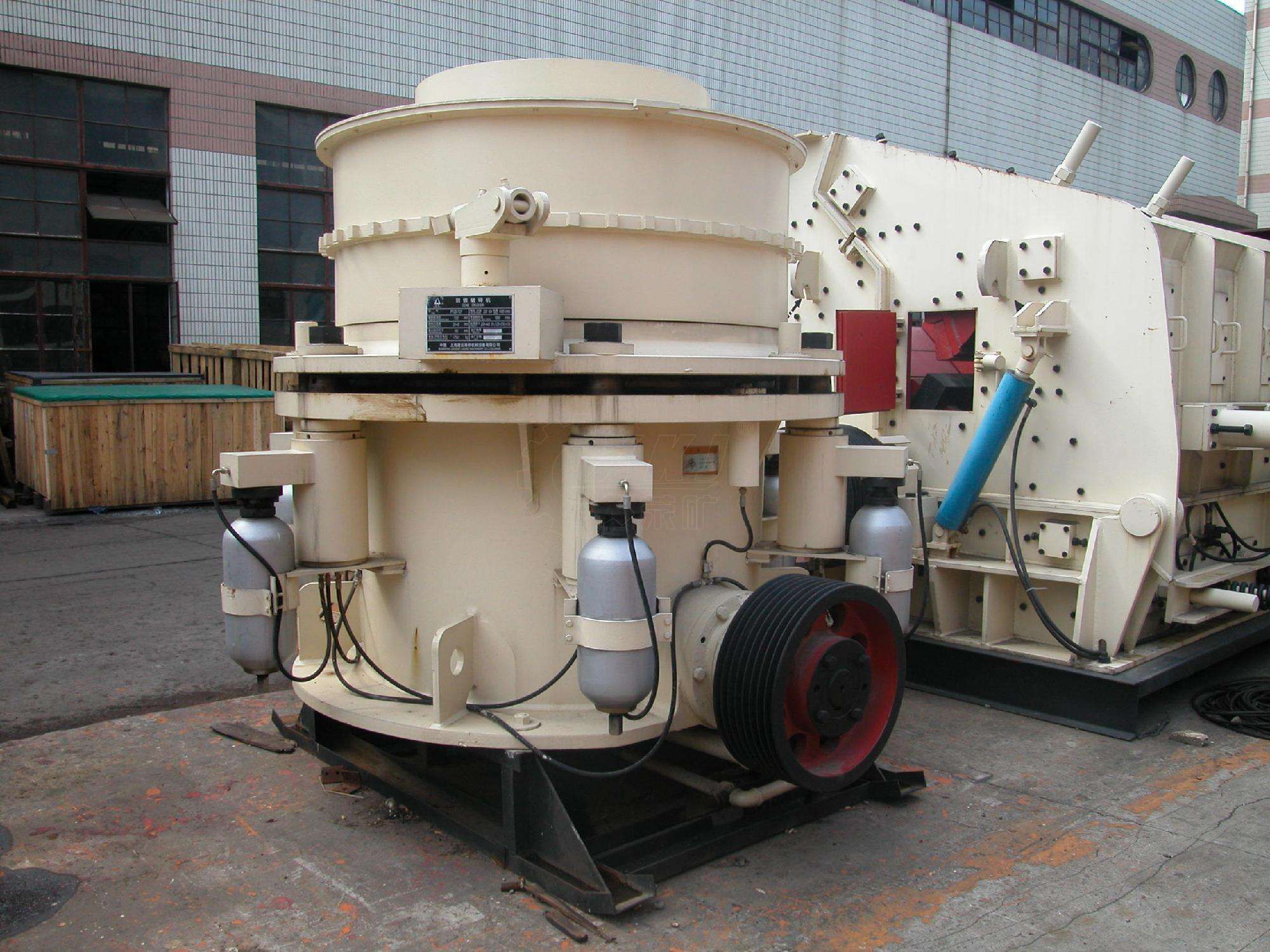
Structurally, hydraulic cone crushers use hydraulic cylinders instead of spring mechanisms. The bottom of the movable cone is supported by a hydraulic cylinder, and the discharge opening adjustment mechanism is hydraulically driven. Spring cone crushers, on the other hand, rely on coil springs for overload protection and discharge adjustment. This structural difference results in a simpler transmission system for hydraulic cone crushers. A single-cylinder hydraulic cone crusher requires only a 210kW main motor, while a spring cone crusher of the same specification typically requires a higher-power motor to compensate for energy loss.
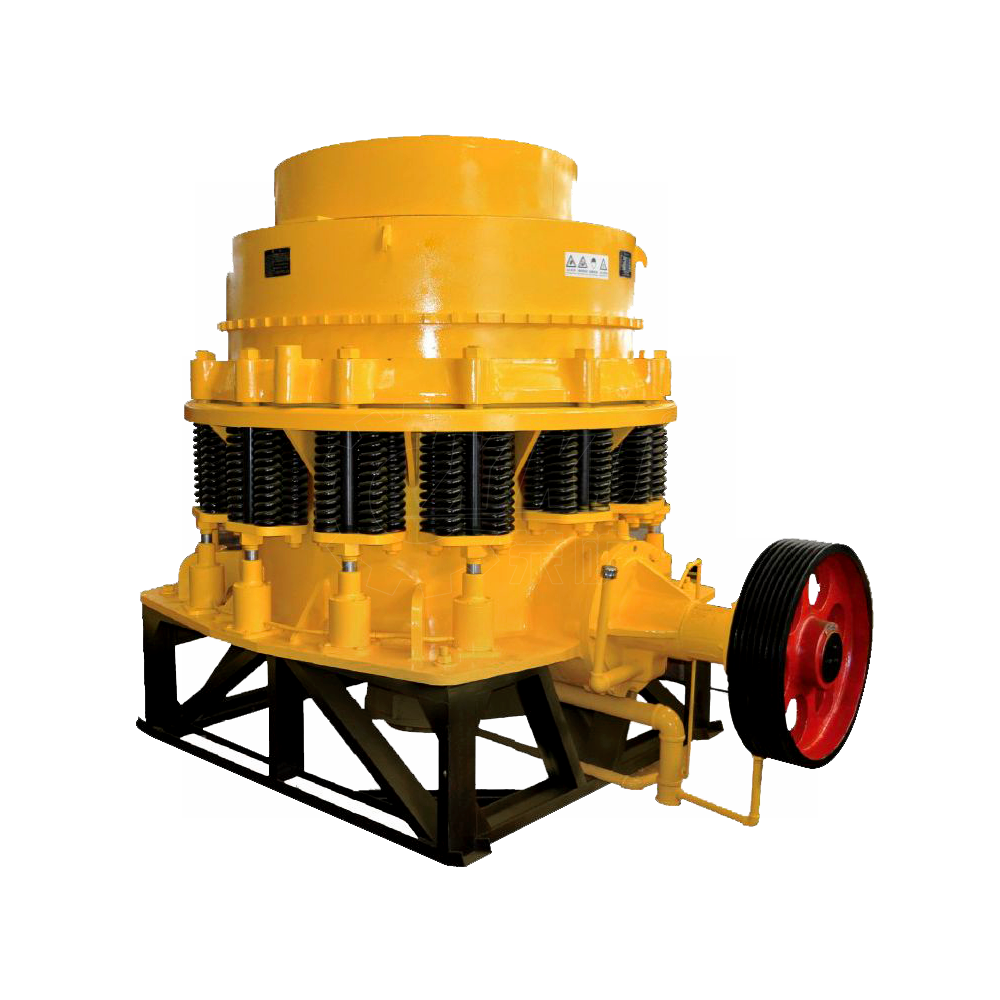
In terms of operating principle, hydraulic cone crushers achieve layered crushing through a hydraulic system. The material is subjected to multi-directional compression within the crushing chamber, resulting in a more rounded finished particle shape with a pinhole-like content that can be controlled below 15%. The hydraulic protection device reacts in milliseconds, automatically raising the movable cone to discharge material when encountering uncrushable material and quickly resetting after the fault is resolved. Spring cone crushers rely on the compression and deformation of a mechanical spring to achieve a safety function. This requires manual intervention to expel foreign objects, and the reset process is relatively slow.
In terms of performance, hydraulic cone crushers can fully discharge material, increasing processing capacity by 30-40% compared to spring cone crushers. Their hydraulic cavity clearing system reduces maintenance time by 50%. However, hydraulic systems require higher oil cleanliness and require precision filtration, while the mechanical structure of spring cone crushers is more adaptable to harsh working conditions.