
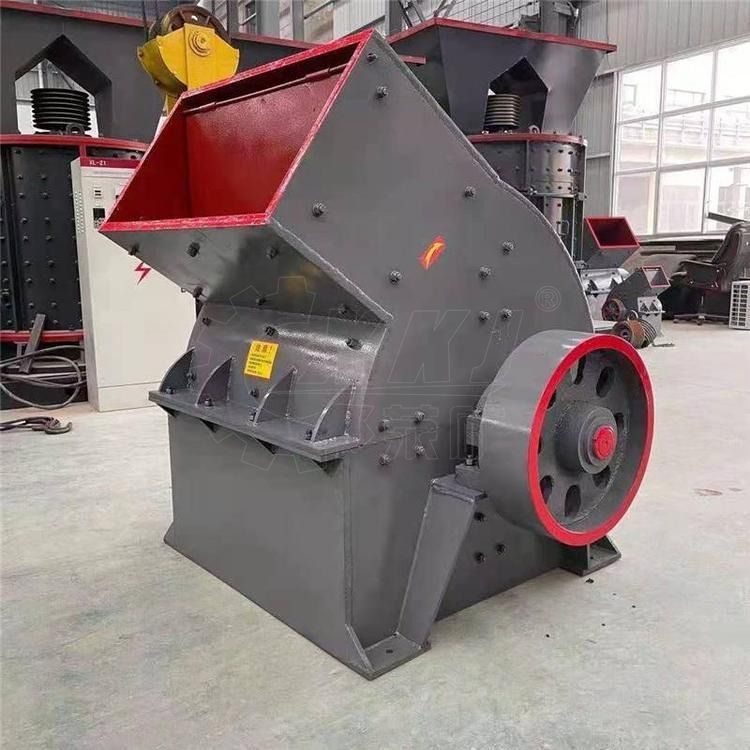
Hammer crushers are critical equipment in the mining and building materials industries, and their operational stability directly impacts production efficiency. In actual operation, equipment failures often occur due to component wear, improper operation, or inadequate maintenance. The following five types of problems are particularly prominent:
1. Hammerhead Wear and Fracture
The hammerhead is the core component that directly impacts the material. Long-term impact from coal or ore can easily lead to wear or fracture. Improper material selection (such as insufficient toughness of high-manganese steel) or defects in heat treatment significantly increase the risk of fracture. Solutions include regularly checking hammerhead thickness, using composite high-chromium cast iron to improve impact resistance, and replacing hammerheads symmetrically by weight to maintain rotor balance.
2. Bearing Overheating and Damage
Bearing failures are often caused by poor lubrication (grease deficiency or contamination) or seal failure leading to dust intrusion. For example, fine particles in coal mining environments can accelerate wear in the bearing housing, causing high temperatures and vibration. High-temperature lithium-based grease should be added every 24 hours, and seal integrity should be checked. If the bearing is damaged, it should be replaced immediately and the installation accuracy recalibrated.
3. Abnormally Increased Discharge Particle Size
When the hammers are severely worn or the screen bars (grate plates) are broken, the crushed material cannot be effectively screened, resulting in excessive particle size. In this case, the worn hammers should be replaced, and the screen plate gap should be repaired or adjusted to ensure that the distance between the hammers and the screen bars meets the design standard (usually 10-20 mm).
4. Abnormal Equipment Vibration
Vibration may be caused by rotor imbalance (such as a difference in hammer weight), loose anchor bolts, or bearing seat misalignment. The machine should be shut down for inspection, and the hammer assembly should be re-weighted (the weight difference should be ≤ 0.2 kg), bolts tightened, and the foundation reinforced. If the cause is improper pulley installation, the pulley slot should be adjusted or the damaged belt replaced.
5. Abnormal Noise in the Crushing Chamber
Knocking noises can be caused by the ingress of non-crushed objects (such as metal blocks), loose liners, or broken hammers. Immediately shut down the machine to clean the chamber, inspect the fasteners, and replace any broken parts. Additionally, metal detection should be strengthened before feeding to prevent the ingress of hard objects.